25/06/2026
Precision springs and metal components for humanoid robotics
How RPK Group helps solve the reliability, dexterity, and supply-chain challenges that decide whether a humanoid robot reaches production.
By Ángel López, PhD, Product Engineering Manager at RPK Technological Center
Humanoid robots are moving from demonstrations to deployment. The market is forecast to grow from roughly $6 billion in 2026 to well over $100 billion within a decade, and hardware still captures most of that value. For the engineers building these machines, the hard problems are not in the software stack. They are in the joints, the hands, and the power path. RPK Group works alongside the engineering teams behind leading humanoid robotics developments, applying over 50 years of precision spring and metal-forming expertise to the components that decide whether a robot performs reliably or fails on the floor.
The engineering pain points that are slowing humanoid production
Three constraints dominate every component conversation in 2026.
- Reliability: a humanoid uses 28 to 44 actuated joints, and each must survive millions of high-load cycles without drift.
- Dexterity: hands and grippers need compact, repeatable force in a tight envelope to manipulate objects safely.
- The supply chain:high-precision actuation components come from a handful of qualified suppliers, and scaling to volume is the biggest bottleneck, according to analysts at IDTechEx and others.
These are not new problems for the RPK Group. They are the same problems we have deal with for five decades across industries where components perform in extreme conditions. In automotive safety systems, vibration, thermal shock, and multimillion-cycle fatigue are routinely used as acceptance criteria. In oil and gas, our NACE-compliant springs run downhole and subsea. We engineer flexible bus bars for eMobility, components for satellite and aerospace actuation, and contact parts for demanding electrical systems, almost always co-engineered with our customers. That discipline transfers directly to humanoid hardware.
Where RPK Group components fit in a humanoid robot
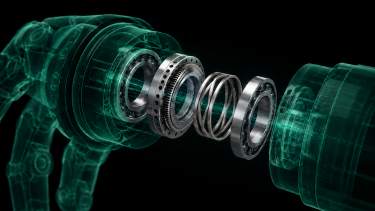
Modern humanoids rely on Series Elastic Actuators (SEAs), which feature a precision spring between the motor and the joint. The spring absorbs shocks, vibrations, and system clearances and, through its measured deflection, acts as a built-in torque sensor under Hooke's law, eliminating the need for expensive strain-gauge sensors. That actuator's performance depends entirely on the spring holding an exact, stable force window across its service life. That is the problem we solve best.
Compression and wave springs as compliance and force-sensing elements in SEAs. Constant force, power spring systems for gravity compensation and cable tensioning that eliminate backlash.
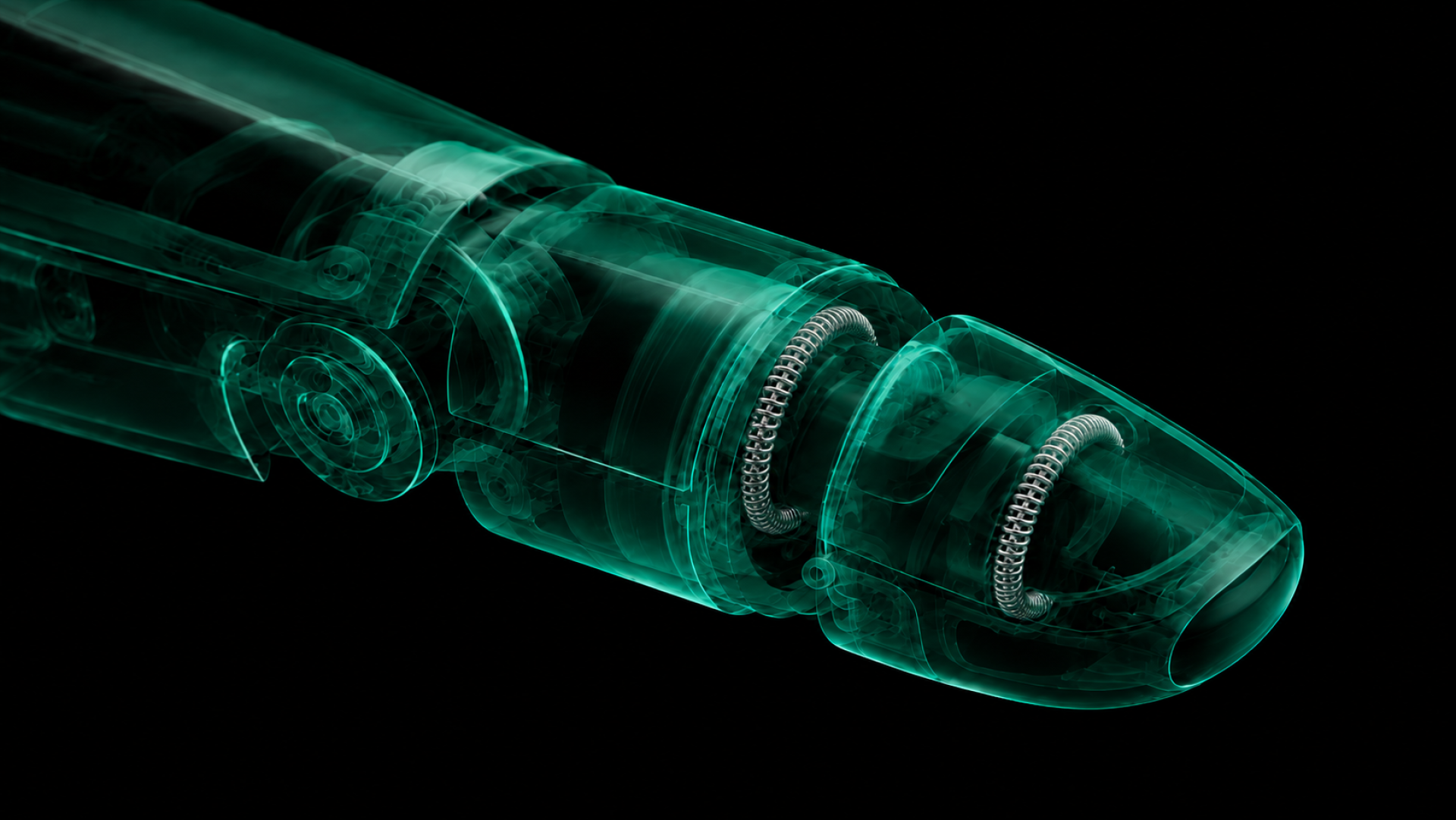
Wave disk springs for gripper-object alignment, plus micro torsion and finger-reset springs that deliver fine, repeatable force in miniature envelopes, the same micro spring and micro part expertise we apply to bionic hands and arms in the medical sector.
Stamped and contact springs are engineered as compliant deflection elements for the force feedback that keeps a robot safe around people.
Bus bars and canted coil springs maintain electrical connectivity under continuous vibration, where each coil acts as a contact point.
Why engineers choose RPK Group over the alternatives
Most spring suppliers either hold automotive-grade quality but lack micro-scale capability, or they make small parts without the fatigue pedigree. RPK Group offers both, giving robotics teams a supplier capable of delivering demanding performance at a miniature scale.
- Automotive-proven fatigue, applied to robotics
We qualify components against vibration, thermal shock, and multimillion-cycle fatigue as standard. For a joint that must run millions of cycles, that proven reliability helps move a program from pilot to product.
- Full in-house control of the supply chain
Our tooling workshop, rolling line, heat treatment, surface treatments, and 100% unitary inspection sit under one roof. When a humanoid program needs custom geometry or tight force tolerances, we build the tooling and hold the tolerances ourselves, rather than waiting on outside vendors, directly addressing the actuation supply chain bottleneck.
- Co-engineering from the function, not the spec sheet
Our engineers work alongside yours, using FEA and FEM simulations, along with rapid prototyping, to validate forces, stresses, and fatigue before we cut production wire. We design highly demanding applications in terms of load and length, involving more complex and creative solutions tailored to each specific case, with engineering and material requirements, earning RPK Group the trust of its customers.
- One supplier for the whole micro-mechanism
RPK Group makes springs, stamped and multislide parts, contact components, and bus bars, and assembles them into finished subassemblies. Engineers can consolidate suppliers and reduce integration risk by sourcing the joint, gripper element, and power contact from a single qualified partner.
- Local service on three continents
With plants across Europe, North America, and Asia, we support regionalized humanoid supply chains with local quality and global capacity, scaling from prototype volumes to series production.
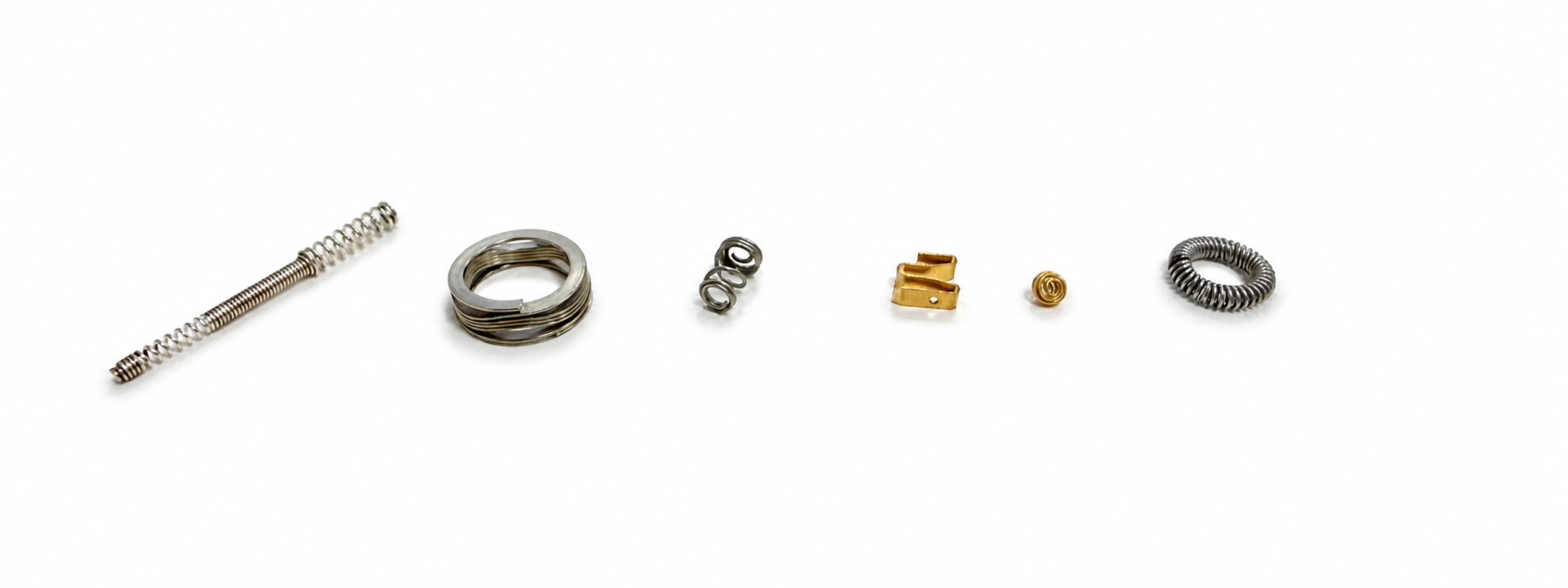
Micro springs and micro parts built for actuation
Dexterity lives at the smallest scale. The springs and stamped parts inside a robotic finger or a compact joint must deliver an exact, repeatable force in a few cubic millimeters, with elasticity and fatigue strength that standard wire cannot provide. RPK Group specializes in micro springs and micro parts: micro compression, extension, and torsion springs, miniature wire forms, and contact components from wire diameters as small as 0.05 mm, holding tight force and dimensional tolerances. We work with stainless steels, phosphor-bronze, and high-performance alloys such as Inconel, Elgiloy, and Nitinol, selected for elasticity, conductivity, corrosion resistance, or biocompatibility, with or without plating.
Where stack height is critical, a wave spring delivers the same force as a conventional compression spring in up to 50% less axial space, helping engineers reclaim space without sacrificing performance.
Your humanoid program depends on small components doing exactly the right thing, millions of times. That is the problem RPK Group solves best. Tell us what your actuator, gripper, or joint needs to do, and our engineers will design the component to optimize performance and cost.
FAQs
- Does RPK Group make springs for humanoid robots?
Yes. RPK Group engineers custom springs, stamped components, contact parts, and bus bars for humanoid robot actuators, hands, joints, and power distribution. We already work alongside the engineering teams behind leading humanoid robotics developments, applying over 50 years of precision manufacturing expertise.
- What components does a humanoid robot need from a spring manufacturer?
Humanoid robots use compression and wave springs in Series Elastic Actuators, micro torsion and reset springs in hands and grippers, stamped and contact springs for force feedback, and canted coil springs and bus bars for reliable power and signal connectivity under vibration.
- How does a spring work as a force sensor in a robot joint?
In a Series Elastic Actuator, a precision spring sits between the motor and the joint. By measuring how far the spring deflects, the controller calculates the applied torque directly through Hooke's law. This provides accurate force sensing without expensive strain-gauge torque sensors, but only if the spring holds a stable, predictable force constant over its service life.
- Why is RPK Group's industrial experience relevant to humanoid robotics?
Humanoid joints must survive millions of high-load cycles, the same reliability challenge RPK Group has solved for five decades across extreme-environment industries: automotive safety, transmission and braking systems, oil and gas downhole and subsea components, eMobility, satellite and aerospace actuation, and electrical systems. We qualify components against vibration, thermal shock, and multimillion-cycle fatigue as standard, which is exactly the durability bar humanoid programs need to reach production.
- Can RPK Group deliver assembled robotic subassemblies, not just springs?
Yes. RPK Group makes springs, stamped and multislide parts, contact components, and bus bars, and assembles them into finished subassemblies. This lets robotics engineers consolidate suppliers and reduce integration risk by sourcing complete micro-mechanisms from a single qualified partner.
- What materials and sizes does RPK Group offer for robotics micro springs?
RPK Group specializes in micro springs and micro parts, producing micro compression, extension, and torsion springs, miniature wire forms, and contact components from wire diameters as small as 0.05 mm while holding tight force and dimensional tolerances. We work with stainless steels, phosphor bronze, and high-performance alloys, including Inconel, Elgiloy, and Nitinol, chosen for elasticity, fatigue strength, conductivity, or corrosion resistance.
- How does RPK Group help solve the humanoid actuator supply-chain bottleneck?
RPK Group controls the full process in-house: tooling, rolling, heat treatment, surface treatment, cleaning, and special packagings in ISO7 clean rooms, and 100% unitary inspection under one roof, with production plants on four continents. This vertical integration lets us hold tight tolerances, build custom tooling quickly, and scale from prototype to series production without depending on external vendors.