03/06/2026
Flexible Bus Bars: custom-engineered power connections for E-Mobility
Stressed system connections, vibration in the e-motor, tolerance problems, or oversized standard parts? RPK Group engineers flexible bus bars to meet your resistance, vibration, and thermal targets and builds them on dedicated automated lines.
By Ángel López, PhD, Product Engineering Manager at RPK Technological Center
If you design high-current systems, the standard bus bar rarely fits. You redesign your packaging around the part, or you accept compromises in contact resistance, weight, performance, and reliability. RPK Group removes that trade-off. We engineer each flexible bus bar for your application and produce it on automated lines specifically designed for this product type.
What a flexible bus bar is
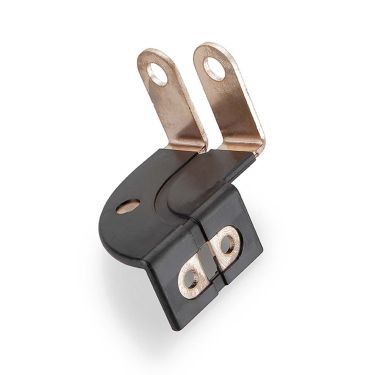
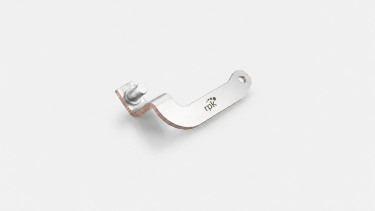
A flexible bus bar is an electrical conductor composed of multiple thin layers of copper or aluminum, bonded together by processes such as laser welding. The layered structure carries high current while staying flexible. That flexibility is not cosmetic, but its main goal is the performance and fulfillment of the design function. Split a solid bar into thin laminated layers of the same total cross-section, and flexibility rises dramatically while the current path stays intact. The result addresses several failure modes, mainly when the part is designed as a static component, but, due to external factors during operation, it ultimately becomes dynamic.
The benefits, stated plainly
| Benefit | What it means for your system |
|---|---|
| Low contact resistance | Even current distribution and less energy lost as heat. |
| Absorbs vibration | Joints stay tight; no fatigue cracking at terminals over the vehicle's life. |
| Compensates thermal expansion | Cells expand and contract freely without stressing the battery poles. |
| Compensates tolerances | Absorbs cumulative tolerance stack-up between densely packed assemblies. |
| Saves space and weight | Routes through tight packaging where a rigid bar cannot bend. |
| Common-part strategy | One flexible design can serve several installation positions, cutting part numbers and cost. |
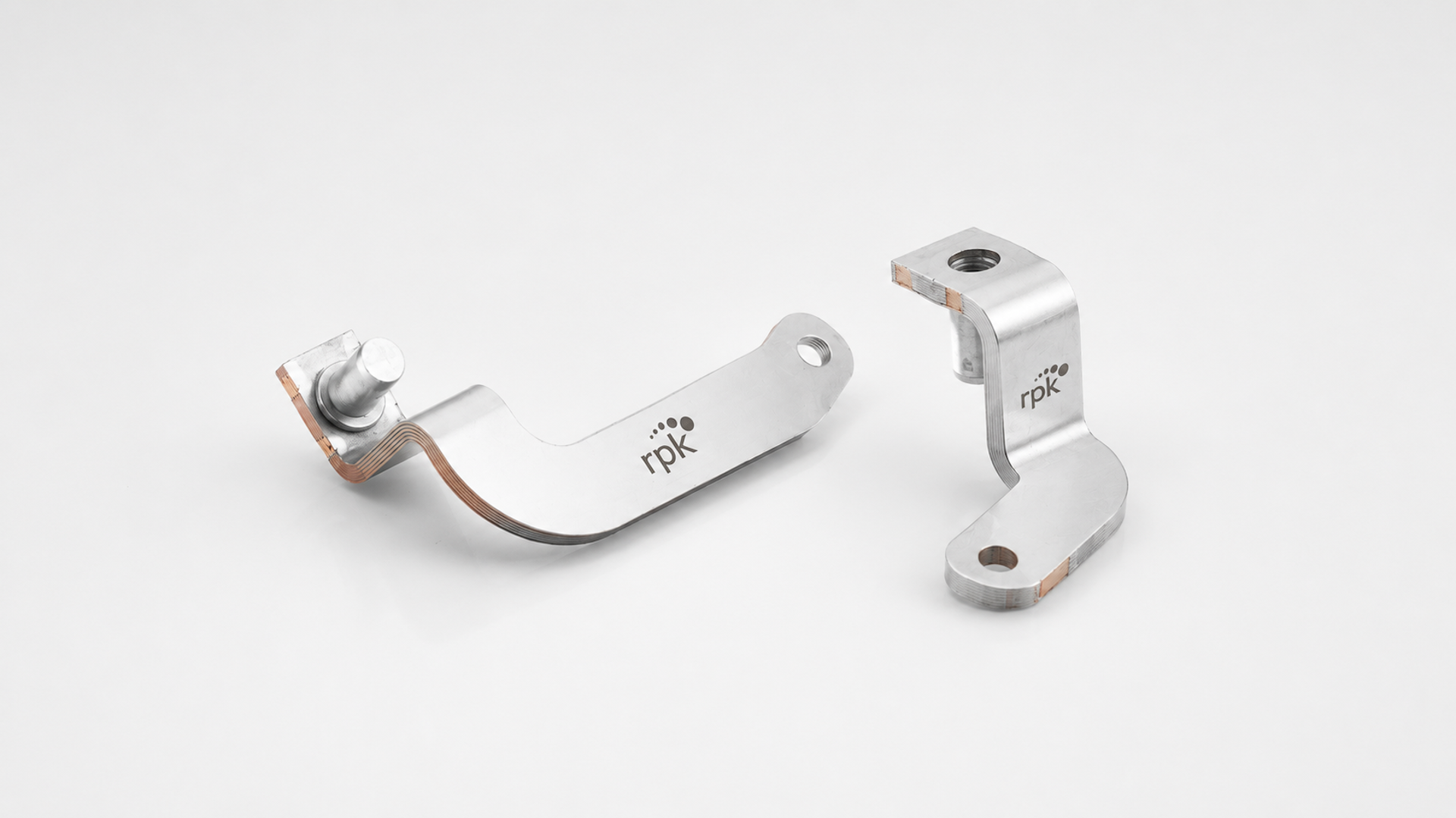
Flexible vs. rigid vs. cable
| Property | Flexible bus bar | Rigid bus bar | Cable |
|---|---|---|---|
| Vibration / movement | Absorbs it | Transfers stress to terminals | Good, but bulky |
| Thermal expansion | Compensates | Cracks at joints over time | Compensates |
| Current density | High | High | Lower for same volume |
| Heat dissipation | Excellent (layered surface) | Good | Limited |
| Tight packaging | Routes around obstacles | Needs straight runs | Needs bend radius and space |
| Tolerance stack-up | Compensates | No tolerance | Partial |
The pain point: spec tables vs. real designs
Many buyers start by searching for ampacity tables and fixed dimensions. That works for commodity parts. It breaks down in demanding applications. A bus bar sized for a static switchgear cabinet behaves very differently within an EV chassis, where multi-axis vibration, thermal cycling, and tight packaging act simultaneously. Picking a standard size off a table usually means oversizing for weight, undersizing for current, or adding stress at the terminals.
RPK Group works the other way around. We do not push a fixed catalog. Our engineers define the conductor based on your real requirements, target current, temperature rise, available envelope, bend radius, vibration profile, and connection interfaces. The part fits the first time, with no forced compromise on contact resistance or fatigue life.
Flexible bus bars applications
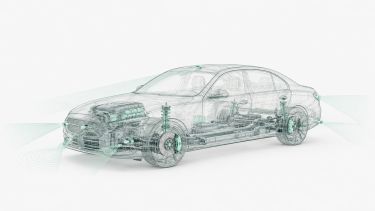
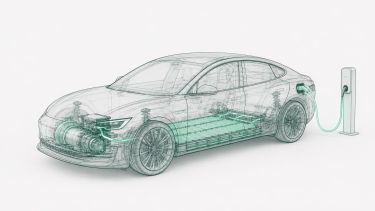
Flexible bus bars sit at the center of modern e-mobility power architecture. Battery cells expand and contract during charging and discharging, while the vehicle experiences constant road vibration. A rigid connection transmits that stress directly to the battery terminals, risking fatigue cracking over a 10–15-year life. A flexible bus bar acts as a buffer, protecting the cells.
Inside the pack and powertrain, RPK Group flexible bus bars work as:
- Battery module connectors: linking cells and modules in the Battery Management System (BMS).
- Inverter and e-motor interfaces: carrying high current between power electronics and the e-drive, where parasitic inductance and AC/DC connection quality matter.
- DC-DC converter connections: compact, low-resistance links between voltage domains.
- EMC-filter interfaces and PCB connectors: clean, repeatable connections in power-electronics assemblies.
The same strengths apply well beyond automotive:
- Energy storage and renewables: connections between batteries, inverters, and stacks in solar and wind systems.
- Data centers: current distribution across racks and servers, where every watt of loss counts.
- Rail and public transport: safe, low-maintenance power distribution under continuous vibration.
- Industrial automation, robotics and power tools: compact connections that survive movement and thermal cycling.
- Bikes and e-bikes: lightweight, space-efficient links for small high-density packs.
Why RPK Group leads
Most suppliers compete on one bonding method or a fixed catalog. RPK Group competes in engineering, process control, tailor-made solutions, and industrialization.
- Dedicated automated lines. We have developed automated production lines specifically for flexible bus bars, which means repeatable quality at series volumes and a competitive cost per part.
- Full custom engineering. We design around your packaging, current load case—not around a standard size —and help reduce material waste and product costs in the process.
- Many manufacturing technologies under one roof. Precision stamping, bending, CNC Multi-Slide forming, laser welding, laser brazing on pads, insert placement, over-molding, assembly, cleaning (we meet the highest cleanliness standards in clean rooms worldwide), and coating (full coating, selective coating, tin, nickel, silver, gold…). We pick the right process for each design rather than forcing a single method.
- Process control that drives performance. Material thickness, surface cleanliness, and plating thickness all affect resistance and reliability. We control each variable precisely, even under vibration.
- Material and coating flexibility. Copper, aluminum, and bronze, with coatings such as nickel for corrosion resistance, tin for conductivity, silver and gold for contact resistance, and contact stability.
- Laser welding
- In-house testing. The RPK Technological Center validates electrical, thermal, and mechanical requirements before parts reach your line.
- A financially solid partner. Nearly 50 years of experience and a healthy group structure to support long-term programs.
Custom-engineered, not forced standard
If you cannot find a spec table on this page, that is deliberate. Publishing fixed ampacity figures would steer you toward a part that may not fit your application. We would rather size the conductor correctly for your current rating, temperature rise, and mechanical environment. Send us the targets and constraints, and our engineering team will define a flexible bus bar that meets them.
FAQs
- Where are flexible bus bars used outside automotive?
Energy storage and renewables, data centers, rail and public transport, industrial automation, power tools, and e-bikes, anywhere high current meets movement, heat, or tight space.
- What manufacturing and joining technologies do you use?
Precision stamping, bending, CNC Multi-Slide forming, laser welding, laser brazing on pads, insert placement, over-molding, assembly, cleaning, and full and partial coating, selected per design.
- Can RPK Group produce flexible bus bars in a series volume?
Yes. We have developed dedicated automated lines for flexible bus bars, supporting repeatable quality and competitive cost from prototype through high-volume series production.
- Which materials and coatings are available?
Copper, aluminum, and bronze, with coatings such as tin or nickel selected for conductivity, corrosion resistance, and stable contact. Insulation options depend on the voltage and environment.
- Why doesn't RPK publish ampacity or dimension tables?
Because the right conductor depends on your current rating, temperature rise, bend radius, vibration profile, and packaging. A fixed table would push you toward a standard size that rarely fits a real application. We instead engineer the part to your targets.
- Can RPK Group customize a flexible bus bar for my application?
Yes. Customization is the core of what we do. We define the material, number of layers, cross-section, geometry, coatings, insulation, and connection interfaces based on your electrical and mechanical requirements, then validate the design in-house.
- Why use a flexible bus bar in an EV battery pack?
Cells expand and contract during charging and discharging, and the vehicle experiences constant vibration. A rigid connection transfers that stress to the battery terminals and can crack joints over time. A flexible bus bar acts as a buffer, absorbing movement while carrying high current with low resistance.
- What is the difference between a flexible bus bar and a rigid bus bar?
A flexible bus bar uses multiple thin, laminated layers, allowing it to bend, absorb vibration, and compensate for thermal expansion and tolerance stack-up. A rigid bus bar is a solid conductor for static, straight-run power distribution. In moving or densely packed systems such as EV battery packs, the flexible version protects terminals and improves reliability.