16/04/2026
Constant Force Springs & Power Springs: steady Load, stored Energy, every Cycle
RPK Group engineers and manufactures custom Constant Force Springs and Power Springs for automotive, medical, industrial, and consumer applications, combining nearly 50 years of precision manufacturing expertise with a global supply chain.
By Fernando Gonzalez, product engineer at RPK Technological Center.
A product engineer with more than 25 years of experience in the group, an expert in developing new products, in particular springs and new products for the automotive and medical sectors. It has been his hands that have created new developments such as clock springs, power springs, and constant-force springs.
Constant Force Springs and Power Springs: What's the difference?
Both are flat strip springs. Both store mechanical energy in a tightly wound coil. But they work differently and solve different problems.
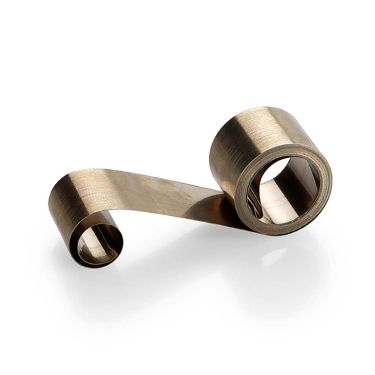
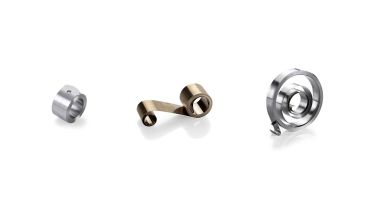
A Constant Force Spring is a pre-stressed strip of flat material — typically stainless steel — coiled around a drum or arbor. When the strip extends linearly, the stored stress resists the load at a nearly constant rate throughout the full stroke. The same force at the start as at the end. This makes it the right choice for retraction, counterbalancing, tensioning, and controlled extension over long distances where a consistent load is non-negotiable.
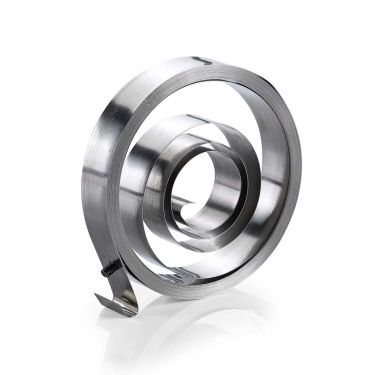
A Power Spring is a flat strip wound tightly into a casing. It stores energy through winding and releases it as rotational torque. Unlike a constant force spring, its output torque is highest at full wind and decreases as the spring uncoils. Power Springs drive mechanisms that need stored rotational energy, not constant linear force.
The distinction matters at specification time. Engineers who need a steady pull throughout the stroke require a Constant Force Spring. Engineers who need stored energy to drive a mechanism through rotation need a Power Spring. RPK Group manufactures both, and our engineering team helps you identify which one your application actually requires.
Types of Constant Force Springs and Power Springs
Both product families include several configurations. Each serves a different combination of load, stroke, or torque requirements, mounting constraints, and cycle life. Choosing the right type is an engineering decision, one where RPK's team works directly with yours.
Constant Force Springs
The standard Constant Force Spring. A prestressed flat strip coils around a drum and extends linearly to apply a steady load. Force is determined by strip thickness, width, and coil diameter. It covers the widest range of applications and is the go-to replacement for counterweights and pneumatic assists in long-stroke mechanisms.
Typical use: cable retractors, counterbalances, brush springs, hose reels
When the free end of an extension spring attaches to a second spool and winds in the same or reverse direction, the output becomes rotational torque rather than linear force. The torque stays stable throughout rotation, with no increase in resistance as the spool winds up.
Typical use: electric motor brush systems, rotating actuators, scroll mechanisms
A Constant Force Spring modified with a profiled strip width or tapered cross-section to produce a deliberately changing force profile over the stroke. Used when the application needs a graduated load — increasing or decreasing — without stacking separate springs.
Typical use: ergonomic tools, rehabilitation devices, progressive-resistance mechanisms
Power Springs
A flat strip wound tightly into a casing or housing, storing energy through winding and releasing it as rotational torque. Output torque is highest at full wind and decreases as the spring uncoils. Compact, reliable, and maintenance-free for mechanisms that need stored rotational energy delivered over multiple turns.
Typical use: clock mechanisms, timers, motor drives, small appliances
A Power Spring manufactured from pre-hardened strip with an induced pre-stress that increases the initial torque output and extends cycle life. The pre-stress allows a thinner, lighter strip to deliver the same torque as a heavier standard spring; a key advantage in space- and weight-constrained assemblies.
Typical use: seat belts, tape measures, window regulators, retractable cable systems
RPK Group manufactures all of these configurations across all types with full engineering support from material selection through cycle-life validation.
Example of a comparative chart of force profiles: coil spring vs constant force spring vs power spring across displacement or rotation
The problems engineers face when specifying these springs
Constant Force Springs and Power Springs solve specific problems well. But getting the specification wrong is easy and costly to fix in production.
- Wrong type specified. Constant Force Springs and Power Springs are both flat strip products, but they solve different problems. Using a Power Spring where a Constant Force Spring is needed, or vice versa, produces the wrong force profile from day one. The root cause is usually a supplier that didn't ask the right questions at the design stage.
- Force drift over cycles. Poorly specified material or coil geometry causes the strip to set or fatigue early. The output force drops below spec within thousands of cycles, not hundreds of thousands.
- Back-bending failure. If the output drum diameter is too small relative to the spring's natural radius, the strip bends against its grain direction. This causes permanent deformation and a sudden drop in force, a common failure in under-engineered designs, for both Constant Force and Power Spring configurations.
- Stroke instability. Long extensions without lateral guides cause the strip to buckle or twist during retraction. The spring still works in test, but fails in production, where it runs unsupported at speed.
- Wrong material for the environment. Standard 301 stainless steel is suitable for most applications. But medical clean rooms, corrosive fluids, high temperatures, or biocompatibility requirements call for Inconel, Elgiloy, or other alloys that most suppliers cannot form to tight tolerances.
- No mounting guidance. Both spring types require proper drum sizing, minimum wrap retention, and end configurations that match the housing. A supplier that ships the spring without input into the assembly design leaves the engineer to troubleshoot on their own.
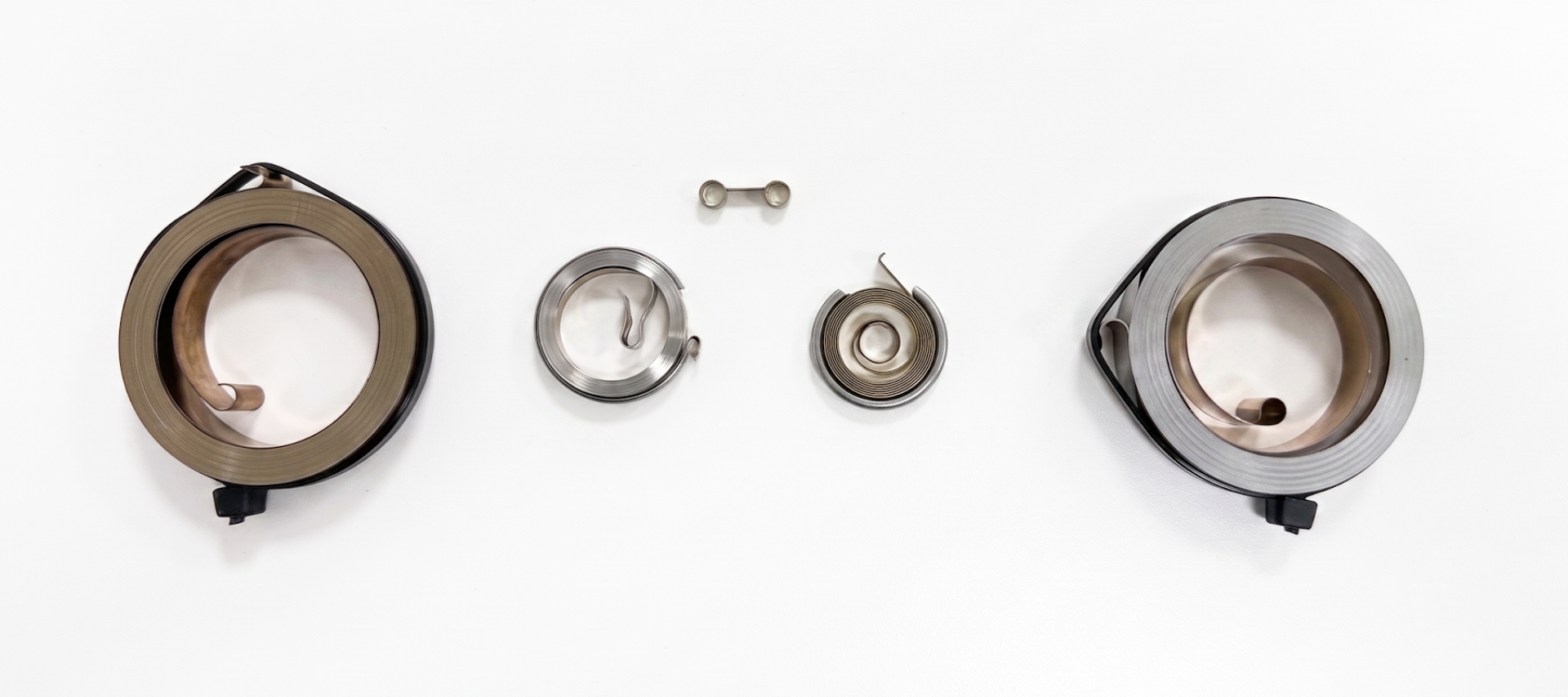
Why engineers choose RPK Group for Constant Force Springs and Power Springs
RPK Group engineers both spring families from first principles; we don't start with a catalog, we start with your application.
Every spring, RPK Group produces a Constant Force or Power Spring that is specified for a defined load or torque, stroke or rotation, cycle life, mounting method, and operating environment. We run fatigue simulations, validate drum geometry, and confirm end configurations before the first prototype leaves the plant.
- Co-development. Our engineers review your assembly, flag back-bending risks, recommend drum sizing, and define end attachment geometry. You get a spring that works in your system, not just on a test rig.
- Full material range. Stainless steel 301, carbon steel, Inconel, Elgiloy, and biocompatible alloys. We select the material based on your environment, not based on what we happen to stock.
- Medical-grade production. ISO 13485 certified. ISO 7 clean rooms on three continents. Constant Force Springs and Power Springs for drug-delivery devices, autoinjectors, surgical instruments, and rehabilitation equipment are standard components of our medical production.
- Global local supply. Manufacturing in Spain, Mexico, China, and India. We produce where you assemble, reducing freight risk, lead times, and import exposure.
Where RPK Group Constant Force Springs and Power Springs perform
Both spring families run in production across a broad range of industries. Often, the same application uses one of each.
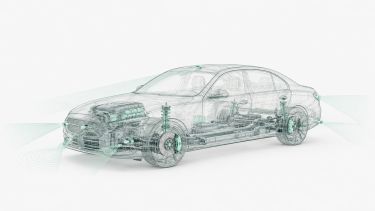
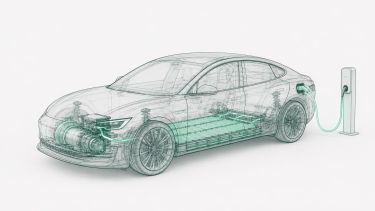
Seat belt retractors (Power Springs), window regulators, trunk lid mechanisms, and cable management systems (Constant Force). Load consistency across the full stroke and reliable cycle life under temperature variation are the key requirements in both cases.
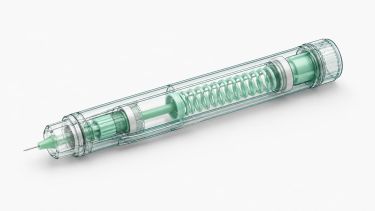
Drug delivery systems and autoinjectors use Constant Force Springs for smooth, controlled actuation. Power springs drive pre-loaded mechanisms in surgical instruments and wearable therapy devices. Both require clean room production and full material traceability.
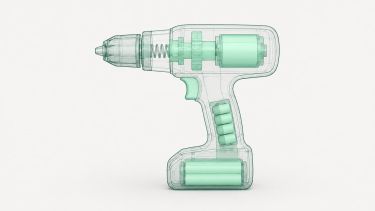
Cable and hose retractors, counterbalance systems, and tool head returns use Constant Force Springs. Power springs drive timer mechanisms, valve actuators, power tools and stored-energy release systems. Both eliminate the need for motors or counterweights in many designs.
Tape measures and retractable cables use pre-stressed Power Springs. Point-of-purchase pushers, printer mechanisms, and appliance door hinges use constant force springs. Compact format, quiet operation, and consistent performance across millions of cycles.
Certifications and Standards
RPK Group holds ISO 9001, ISO 13485, and IATF 16949 certifications across its global manufacturing network. Our clean rooms meet ISO 7 (Class 10,000) requirements for medical device manufacturing in Europe, North America, and Asia.
Constant Force Springs and Power Springs for regulated industries come with full material traceability, dimensional reports, and — where required — FAI and PPAP documentation. We work within your quality system from day one.