09/07/2026
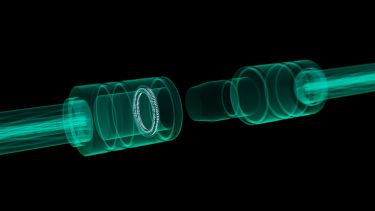
Canted Coil Springs for subsea and downhole connectors: reliable contact where failure is not an option
RPK Group engineers custom canted coil springs for wet-mate connectors, penetrators, and downhole tool strings, co-designed with the teams behind major subsea developments.
By Fernando Gonzalez, Rubén Díaz, engineers at RPK Technological Center, and Álvaro García Nograro, KAM for Canted Coil Springs Projects
A subsea connector can cost more than 100.000€. Replacing one at 2,000 meters costs far more: vessel time, ROV operations, and lost production. Downhole, a failed contact means pulling the entire tool string. In both environments, a single canted coil spring often keeps current and signal flowing.
RPK Group works with the engineers behind leading subsea connector and cable system developments worldwide. We design and manufacture custom canted coil springs for stable contact under shock and vibration, controlled mating forces, corrosion resistance, and long-term reliability in places no one can reach for repairs.
Why Connector Engineers Specify Canted Coil Springs
Unlike conventional springs, every coil in a canted coil spring deflects independently. That geometry delivers three properties that matter in subsea and downhole design:
- Multipoint electrical contact. Each coil acts as a separate contact point. The spring carries more current in less space, runs cooler, and maintains stable resistance when the connector rotates, vibrates, or cycles thermally.
- Near-constant force over a wide deflection range. The flat force curve compensates for misalignment, tolerance stack-up, and thermal expansion, which are critical during ROV-assisted stab-in mating.
- Predictable insertion and breakaway forces. By tuning wire diameter, coil height, cant angle, and groove design, we set the exact force to latch, hold, and disconnect. No separate fastener. No tools.
One spring replaces three components: the electrical contact, the mechanical latch, and the EMI shield. That reduces part count, weight, and failure modes in each connector insert.

Subsea Applications: Built for the All-Electric Future
Subsea production is moving from electro-hydraulic to all-electric architectures. Wet-mate connectors are a fast-growing segment of the underwater connector market, and every one depends on contact elements that perform for 25 years without intervention. RPK Group canted coil springs serve as:
- Contact elements in wet-mate and dry-mate electrical connectors for subsea production systems, umbilicals, and power jumpers.
- Grounding and screen-continuity springs in cable terminations and hang-offs absorb cable expansion and contraction while maintaining electrical contact.
- Latching and holding elements in penetrators and ROV-mateable interfaces, with insertion forces engineered for remote operation.
- Contact springs for offshore wind array cables, export systems, and interconnectors, where the same reliability rules apply.
Downhole Applications: Contact Integrity Under HPHT Conditions
Downhole tools keep getting smarter. More electronics downhole means more connectors that must survive high pressure, high temperature, shock, and sour gas. In this environment, RPK canted coil springs deliver:
- Electrical continuity in tool string connectors, including threaded and stab-in interfaces where each coil deflects independently to cut through oxides and maintain contact through 360° rotation.
- Signal integrity for MWD/LWD electronics, with EMI shielding that protects data transmission from noise.
- High-force locking between tool string components, replacing threaded fasteners that loosen under vibration.
- Seal energizing, applying continuous radial pressure that keeps spring-energized seals leak-tight in drilling and completion equipment.
Materials Engineered for Sour Service and Seawater
Material selection determines whether a spring survives exposure to H2S, chlorides, and heat. To address these conditions, RPK Group manufactures canted coil springs in Inconel X-750 and Inconel 718, both compliant with NACE MR0175 when heat-treated to specification, as well as Elgiloy, stainless steels, and copper alloys. Silver and gold plating increase conductivity and protect against corrosion, and we plate with galvanically compatible materials to prevent corrosion at the contact interface.
Why Engineers Choose RPK Group
Co-engineering from day one. Our Technological Center works directly with your design team, iterating on spring force, materials, welding methods, and groove geometry until the spring meets your load and electrical requirements, and is validated through testing.
- Proven in the field. Our springs already operate in leading subsea connector and cable developments worldwide, and in NACE-compliant downhole service.
- Supply security. With nearly 50 years of spring engineering and plants on four continents, RPK gives you a qualified strategic source and reduces single-supplier risk on critical programs.
- Certified discipline. IATF 16949 and ISO 13485 quality systems mean full traceability and validated processes on every production lot.
- Full customization. Wire material, wire diameter, coil height, cant angle, plating, welded rings, or open lengths—every parameter is engineered for your connector, not picked from a catalog.
Frequently Asked Questions
- What do canted coil springs do in subsea and downhole connectors?
They perform three functions in one component: multipoint electrical contact, mechanical latching and holding with near-constant force, and EMI shielding. In wet-mate connectors and downhole tool strings, they keep current and signal flowing under shock, vibration, misalignment, and thermal cycling.
- Which materials does RPK Group use for subsea and downhole canted coil springs?
We manufacture in high-performance alloys such as Inconel X-750, Inconel 718, and Elgiloy, with silver, gold, and other platings. Inconel X-750 and heat-treated Inconel 718 meet NACE MR0175 / ISO 15156 requirements for sour service, subsea, and surface.
- Can RPK Group act as a second source for canted coil springs?
Yes. We design and manufacture custom canted coil springs to your load, electrical, and dimensional requirements, with plants on four continents. Engineering teams qualify RPK Group as a strategic alternative to reduce single-source risk on critical connector programs.
- How does RPK Group control insertion and breakaway forces?
Our Technological Center tunes spring force, wire material, wire diameter, coil height, cant angle, and groove geometry to hit the exact force window your design specifies, then validates the result through testing and iteration with your engineers.
- Does RPK Group have experience in the subsea connector industry?
Yes. RPK Group already works with the engineering teams behind some of the world's most important subsea connector and cable system developments, backed by nearly 50 years of precision spring manufacturing.
- What certifications support RPK Group's quality system?
RPK Group operates under IATF 16949 and ISO 13485-certified quality systems. Both require full traceability, process control, and validated manufacturing, the same discipline applied to every subsea and downhole spring we produce.