04/01/2026
RPK Group: More than half a century of hard graft, now opening up to the medical sector | Article published in Diario Noticias de Alava
Original article written in Spanish in the Diario de Noticias de Álava
Read the article published on January 4, 2026, about RPK Group in the Diario de Noticias de Álava, written by Miren Ibañez. All photographs are by Jorge Muñoz.
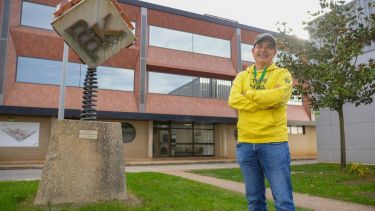
“From a group of 19 brave entrepreneurs in a small office in the center of Vitoria-Gasteiz to a group with global reach, six locations across three continents, and more than 750 employees.” This is how RPK Group summarizes its history on its website. When asked about it, Iñigo Fernández de la Peña, President of the Governing Council of this cooperative from Álava, refers to the title of the book published last year to mark the company’s 50th anniversary: Pico y pala (Pickaxe and Shovel).
“And it’s not called pickaxe and shovel by chance, because it has been a constant,” Fernández de la Peña emphasizes. Today, the company—headquartered on Portal de Gamarra and dedicated to the manufacture of springs and highly complex metal components—is entering the medical world.
This idea of “pickaxe and shovel” reflects both the difficulties the company has faced and the determination to overcome them, Fernández de la Peña explains. This was already evident at the cooperative’s founding in 1974, when it soon had to confront the oil crisis: “We didn’t really get back on our feet until 1980. I think those years shaped the cooperative’s character.”
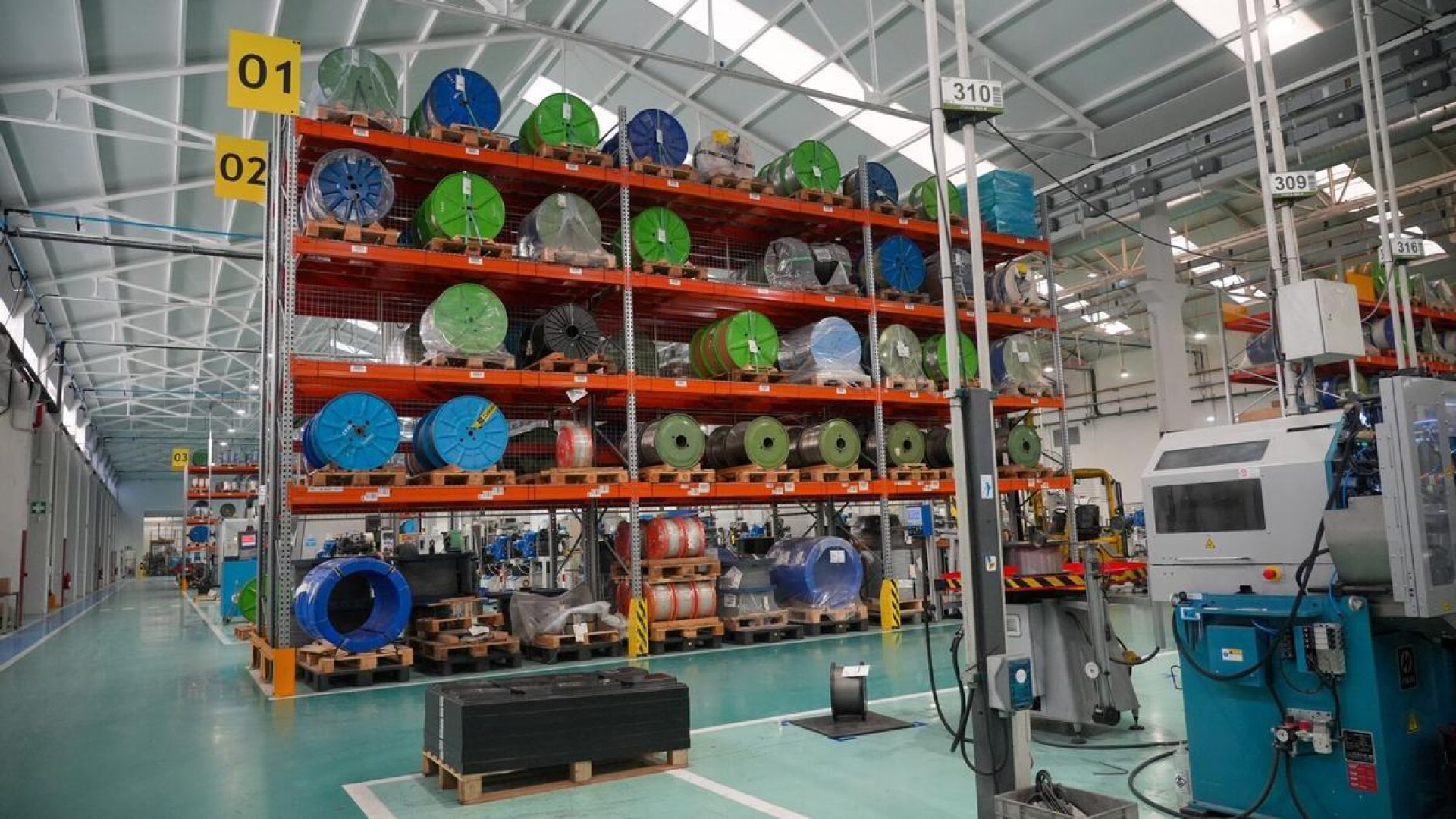
The company grew throughout the 1980s. “They began hiring from nearby vocational training centers—Jesús Obrero, Diocesanas,” he recalls, adding that “the first thing we had to do was internationalize.” Up to the year 2000, growth came mainly through exports: “From exporting virtually nothing in 1980 to exporting 60% of all our products by 2000.”
At the same time, during the 1990s, the personal computer boom took off. “RPK, although an automotive company, rode the electronics boom and manufactured springs and mechanical components for printers all over the world.” One figure illustrates this period: between 1994 and 2000, RPK Group achieved sustained annual growth of 20%.
An internationalized, export-driven company
“We realized that suddenly 10% of our sales were in Mexico, with attractive margins.” This was the seed of the decision taken in 2001 to open a plant in Mexico. That decision soon collided with the September 11 attacks. “At Christmas, major clients in the Guadalajara area, linked to the electronics sector, told us they had decided to move to Singapore and China.”
“If in the first year we were planning to sell €2 million, we didn’t even reach €200,000,” he recalls. “Once again, pickaxe and shovel. It took us five years to reach those €2 million that had moved to China, and the headquarters had to support it.” Today, sales from the Mexican plant alone equal what RPK Vitoria billed at that time: “If Vitoria billed €25 million back then, today Mexico alone invoices €25 million.”
In 2008, RPK arrived in India, and in 2018, it established itself in China. “Everything we’ve built helps the Vitoria plant. This global production capacity positions us as leaders and allows us to access new projects.”
As a result, RPK Group is now a highly internationalized company, with plants in Mexico, India, China, and Tarragona, and also highly export-oriented: around 80% of production in Vitoria goes to international markets.
From automotive to medical
The core of RPK’s activity has traditionally been—and continues to be—the automotive sector, which is currently undergoing a period of transition and uncertainty that naturally affects its suppliers. “We’re in a curious situation. Vehicles with combustion engines are still being sold, so we must continue investing to optimize what we do today. At the same time, electric vehicles are coming, and for the past ten years we’ve invested in battery connectors that haven’t taken off yet and therefore aren’t generating sales.”
Fernández de la Peña summarizes it clearly: “We have to invest in what feeds us today—what we call horizon one; in what we believe should feed us in the future, electric vehicles—horizon two; and in horizon three, medical, where we see opportunities, important projects are coming in, and some have already been awarded.”
RPK’s activity goes beyond automotive. The cooperative also manufactures springs and mechanical parts for bicycles, consumer goods such as capsule coffee machines or printers, power tools, and specific industrial products. “We are a cooperative,” the president of the Governing Council insists.
“We build job opportunities here, and if we see that the future growth and quality of our members can come from there, we don’t make investments with short payback periods, but with long-term returns. Some may fail—and that’s okay. Making bets in different markets and having one fall along the way is acceptable because we know the rest will succeed. This has been a constant throughout RPK’s life.” He stresses: “We build opportunities for future generations.”
A new investment to “open up opportunities”
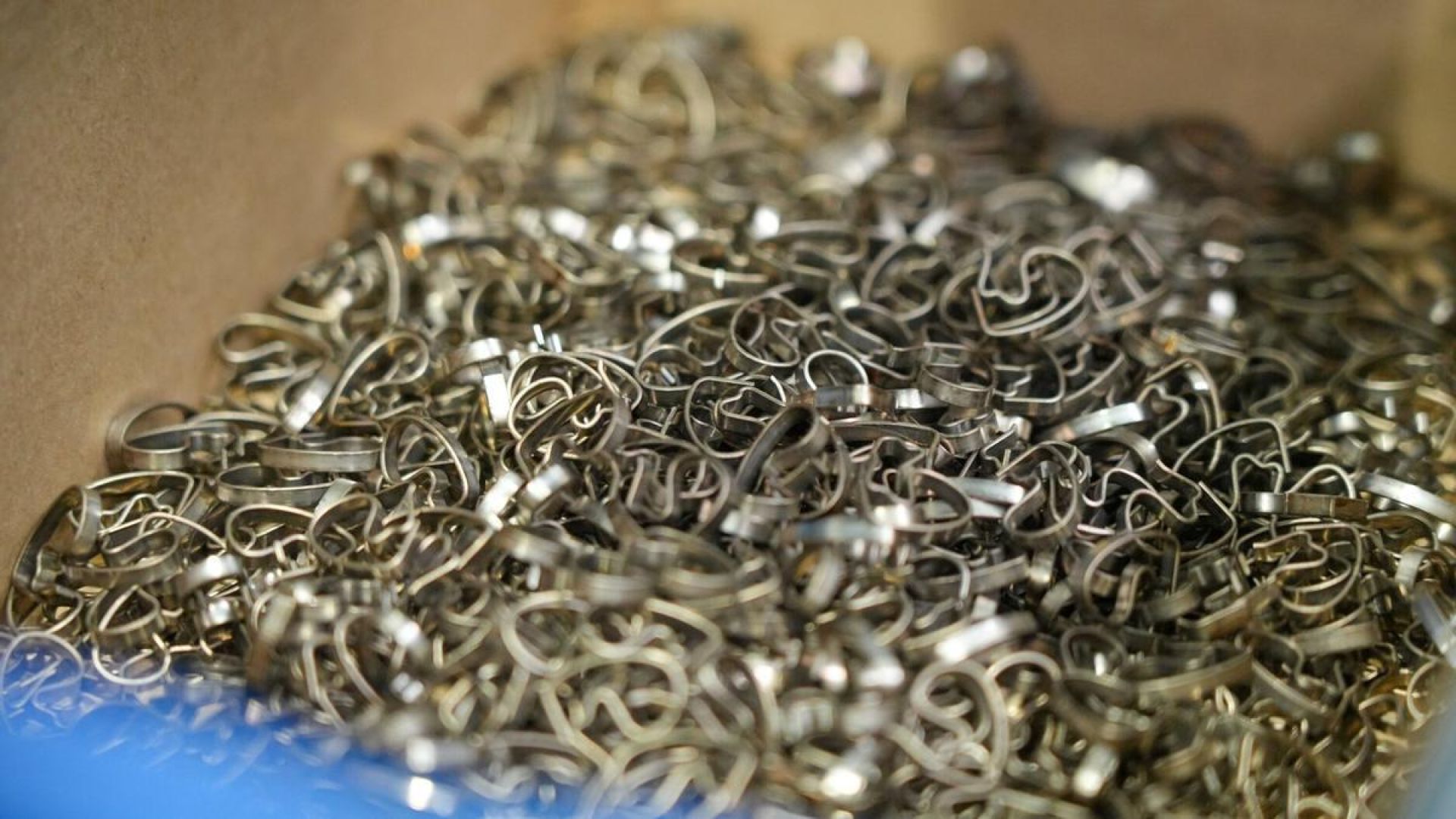
The cooperative’s current bet is on the medical devices sector, an area in which RPK is also supported by its plants in China, India, and Mexico—“we don’t just have factories, we also have engineering centers”—which are “helping to open up opportunities.” This commitment translates into the production of springs and components for autoinjectors, pen injectors, inhalers, and spray devices, among others.
This project is already changing RPK’s face. At its headquarters in Vitoria-Gasteiz, construction work is underway to transform one of its facilities into a laboratory that meets the demanding production standards required for this type of product. This will involve an investment of €4 million. “When will this start paying the bills? We believe it will start doing so around 2030,” Fernández de la Peña predicts.
A “vital” commitment to innovation
This strategic step would not be possible without the central importance RPK Group has historically placed on innovation—a “vital” factor for making differentiated, high-value bets. This commitment took shape in 2016 with the inauguration of the RPK Technological Center in Vitoria-Gasteiz. Today, 25 professionals work there, out of the 250 employees the company has in the city (around 800 across the Group).
“Last year we managed to bill 5% of Vitoria’s sales directly to engineering services related to development. We were not seeking economic profitability from the technological center; we were looking for a different kind of long-term return.”
The inevitable question arises: how do you successfully compete in international markets as a cooperative? Fernández de la Peña is clear: “It’s an advantage. Our clients see that we are deeply involved in the company’s future. We keep our commitments, we have financial strength, and we have no problem moving people to international subsidiaries.”
“We are a cooperative”: quality employment and strong roots
This level of involvement extends from financial matters to workforce training. “We don’t just need people who are highly qualified in their field; we also need to train them, because they will move into administrative roles and become members of the Governing Council—as I did.”
“We now face the challenge of generational renewal. The workforce has an average age of 41, but a segment is around 50. What we do is bring people in ahead of time. For example, if we have a very specific traction component with complex technology and three specialists will retire in ten years, we open two positions now to train them in that technology. If there’s no space in Vitoria, we propose sending them abroad for two or three years, and then they return as trained members and technicians.” He adds: “Our clients see that even in the face of demographic challenges, we have a plan and we are executing it.”
“Our clients’ eyes light up,” Fernández de la Peña stresses, “because this is not the norm.” He explains: “The usual thing is for an investment fund to buy a company like this and move the decision-making center to London. We don’t have to call London to decide whether to invest €4 million in medical, as we are doing this year. We decide that here, in the General Assembly, and move forward.”
Another unavoidable question: Does RPK Group struggle to find qualified professionals? The answer is clear: “RPK has no problem attracting talent. Over the past three years, we have been constantly hiring.” The cooperative has maintained a very close relationship with vocational training centers in Álava and the Basque Country since its beginnings. In fact, last November it received the Hetel Award.
“We need to change the way companies approach educational centers,” Fernández de la Peña explains. “I encourage companies to have a strong social presence in their territory.” He adds that the real challenge lies not so much in attracting young people as in integrating them and determining what training to offer. “Young people are talented, but they need opportunities. And of course, they must be paid properly. Industry must commit to creating well-paid jobs.”
In January, RPK Group will begin shaping its new strategic plan. “At the level of international plants, we see the portfolio as covered.” The future, he says, appears white: “We see ourselves dressed in medical. I see a white future, a medical environment—very interesting, exciting, and a great place to enjoy working at RPK.”
The social transformation plan as a cornerstone
A key pillar for RPK Group is its 2025–2028 Social Transformation Strategic Plan, built on four axes: cooperativism, women, the Basque language, and youth. Fernández de la Peña offers a figure: “Approximately 1% of monthly sales goes to activities with a social purpose.”
Within this framework are initiatives such as the one launched through Batera (Arabako Kooperatibak Elkarlanean) to support the creation of a women’s cycling team for girls aged 14 to 16. Another example is a teamwork competition designed to promote STEM education among young people, especially girls, after detecting a slowdown in female participation in these studies. This led to the creation of Batera Gazte Bidaia, which is already preparing its second edition.
Another initiative that emerged from debate within RPK’s transformation committee was to “allocate an annual budget to support cooperative members involved in social projects.” This tool was later extended to retired employees of the company who are also engaged in social initiatives.